
Carpenter Bee
Our remedy for carpenter bee control
First, contact us. Carpenter Bees are most beloved for being Pollinators, but the damage they can do is very serious. Painting bare wood can deter some carpenter bees but is a limited solution. Once holes have been started, the nest galleries must be treated with professional pest control products. The holes can be plugged several weeks later when it is positive that the bees have been killed. Eliminating water leaks and rotting wood from your property will make it less attractive to carpenter bees.

How to Identify a Carpenter Bee
Appearance
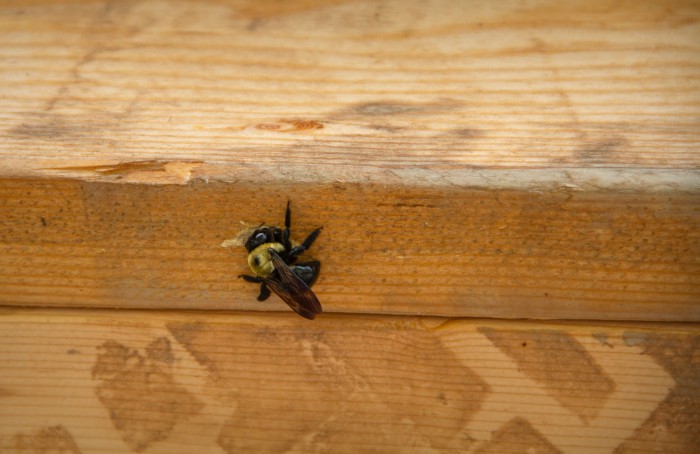
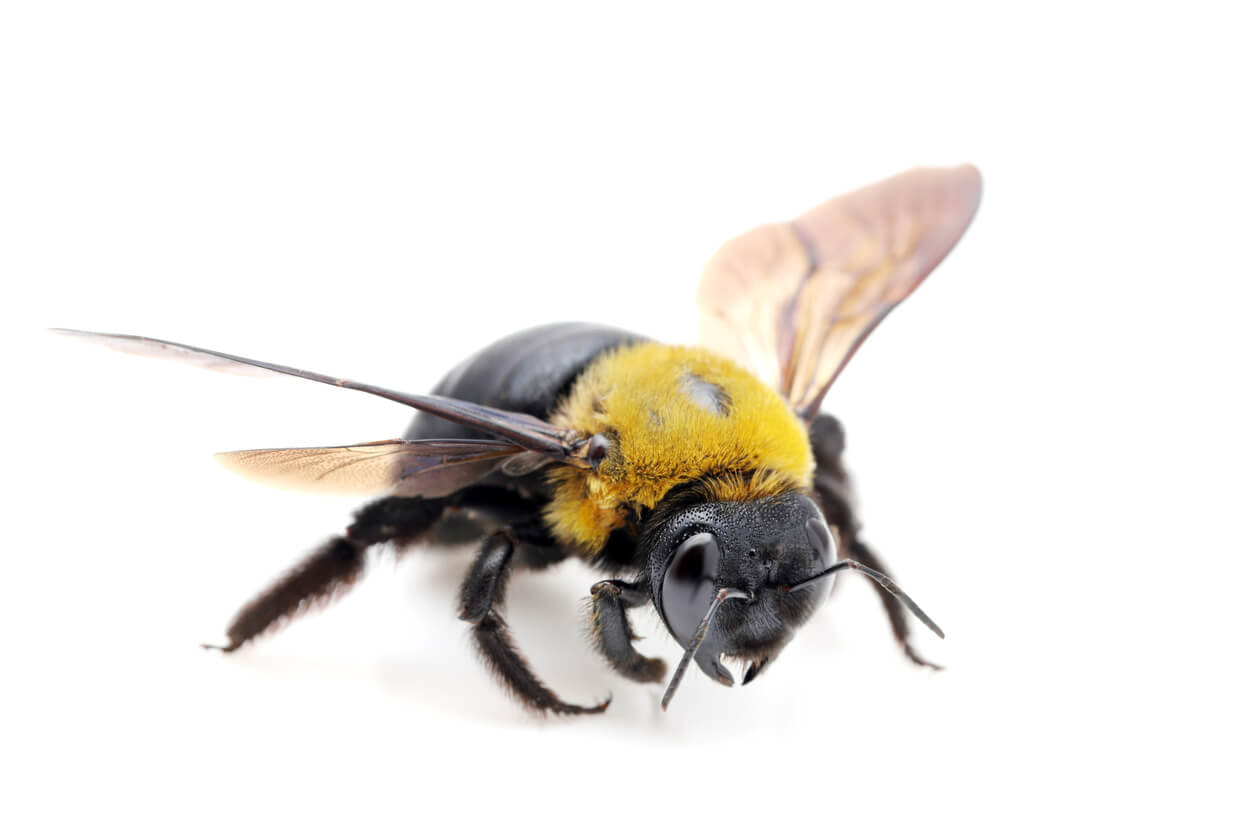
Carpenter bees resemble bumblebees in both size and color. Their abdomens are all black, with few yellow hairs and measure about 1″ long.
Habitat
Carpenter bees get their name from their habit of boring into wood to make galleries where they raise their young. In natural habitats, they live in logs and dead tree limbs, while around homes they target bare wood decks, fences and window sills. They prefer weathered or bare wood to painted wood. Like carpenter ants, the softer or more rotten the wood is, the more attractive it is to these bees. While they do not pose a public health threat, their nest building does damage wood.
Diet
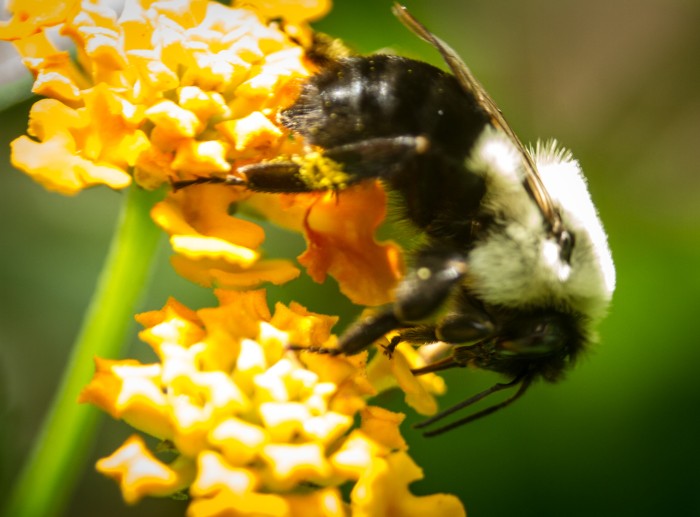
Carpenter bees feed on nectar.
Is This Your Critter?
Maybe it is, maybe it isn’t. We can handle the identification and get you a solution to your problem quickly.
Get a remedy now. Send a message!
Carpenter Bee FAQ
What Are Carpenter Bees?
Carpenter Bee are large bees that are commonly mistaken for bumblebees because of their similar size and coloring. Unlike bumblebees, carpenter bees have shiny, mostly hairless black abdomens. These bees tunnel into wood to create nesting galleries where they raise their young.
Are Carpenter Bees Dangerous?
Carpenter bees are generally not aggressive toward people. Male carpenter bees may hover near nesting sites and appear intimidating, but they do not have stingers. Female carpenter bees can sting, although this is uncommon and usually only occurs if they are directly handled or threatened.
Can Carpenter Bees Damage My Home?
Yes. Carpenter bees can cause cosmetic and structural damage by boring tunnels into exposed wood surfaces around the home. Common nesting areas include decks, railings, soffits, fascia boards, fences, pergolas, porches, and outdoor furniture. Repeated activity over multiple seasons may expand the tunnels and increase damage.
What Attracts Carpenter Bees?
Carpenter bees are attracted to unfinished, untreated, stained, or weathered wood. Softwoods such as cedar, pine, redwood, and cypress are especially appealing. Homes throughout the greater Chicago region with exposed exterior wood may be more vulnerable to carpenter bee activity during spring and summer.
When Are Carpenter Bees Most Active?
Carpenter bees are most active during the spring and early summer months when adults emerge to mate and build new nesting galleries. Homeowners often notice increased bee activity around decks, porches, eaves, sheds, and wooden trim during warm, sunny weather.
How Can I Tell If I Have Carpenter Bees?
Some common signs of carpenter bee activity include:
- Small, perfectly round holes in wood surfaces
- Sawdust-like debris beneath nesting areas
- Bees hovering around wooden structures
- Yellow or brown staining near entry holes
- Increased woodpecker activity around damaged wood
If carpenter bees are left untreated, they may return to the same nesting areas year after year.
Do Carpenter Bees Come Back Every Year?
Yes. Carpenter bees often reuse and expand old nesting tunnels if the wood remains untreated or unsealed. Over time, repeated nesting activity can increase both cosmetic and structural damage around the property.
How Can I Help Prevent Carpenter Bees?
Homeowners can help reduce carpenter bee activity by:
- Painting or sealing exposed wood
- Repairing damaged or rotting wood
- Filling old nesting holes after treatment
- Reducing unfinished exterior wood surfaces
- Scheduling seasonal inspections and preventative treatments
Professional carpenter bee control services can help manage active infestations and reduce the likelihood of future nesting activity.
Are Carpenter Bees Pollinators?
Yes. Carpenter bees are beneficial pollinators that help support flowers, gardens, and native plants throughout the Midwest. While they play an important ecological role, their nesting behavior can still create problems for homes and wooden structures.
What Areas Does Rose Pest Solutions Serve for Carpenter Bee Control?
Rose Pest Solutions provides professional carpenter bee control services throughout the greater Chicago area and surrounding Midwest communities. Our team helps homeowners identify carpenter bee activity, protect vulnerable wood structures, and reduce recurring infestations with targeted treatment and prevention solutions.




“He even identified the pest (carpenter bee) that was giving us the most grief and did extra treatment for that.”
“The technician was very polite and knowledgeable. He even identified the pest (carpenter bee) that was giving us the most grief and did extra treatment for that. He arrived on time, got right to work, and answered all questions. Great job!”
Barb R. | Homeowner
Kenosha, WI
You’ve got a pest problem. We’ve got your pest solution.
Whether you’ve got wasps, rodents, spiders (or you name it), we can assist with your pest problem. We can even provide same-day service. Drop us a line to schedule your pest control services today!

Safe For Your Family and Business
We’re licensed, trained, and certified by the Departments of Public Health and Agriculture, using safe, EPA-regulated materials, always.
Attacking Infestations at the Root
We don’t come in spraying. We evaluate the root of your problem, and recommend and enact pre-emptive measures before any chemicals are used.
Assessments Before Any Contracts
Our Customer Care Center walks you through every service, every charge, and every solution before you agree to anything. Our commitment is to you.