
Most homeowners almost NEVER see termites until the damage is already done. This is because termites damage wood very slowly and quietly behind walls, under floors, and inside wooden structures where they can stay out of view for months or even years.
Your home is more than an investment. It’s where your kids sleep, where pets play, and where memories are made. Preventing termites in your home protects your peace of mind and improves your quality of life.
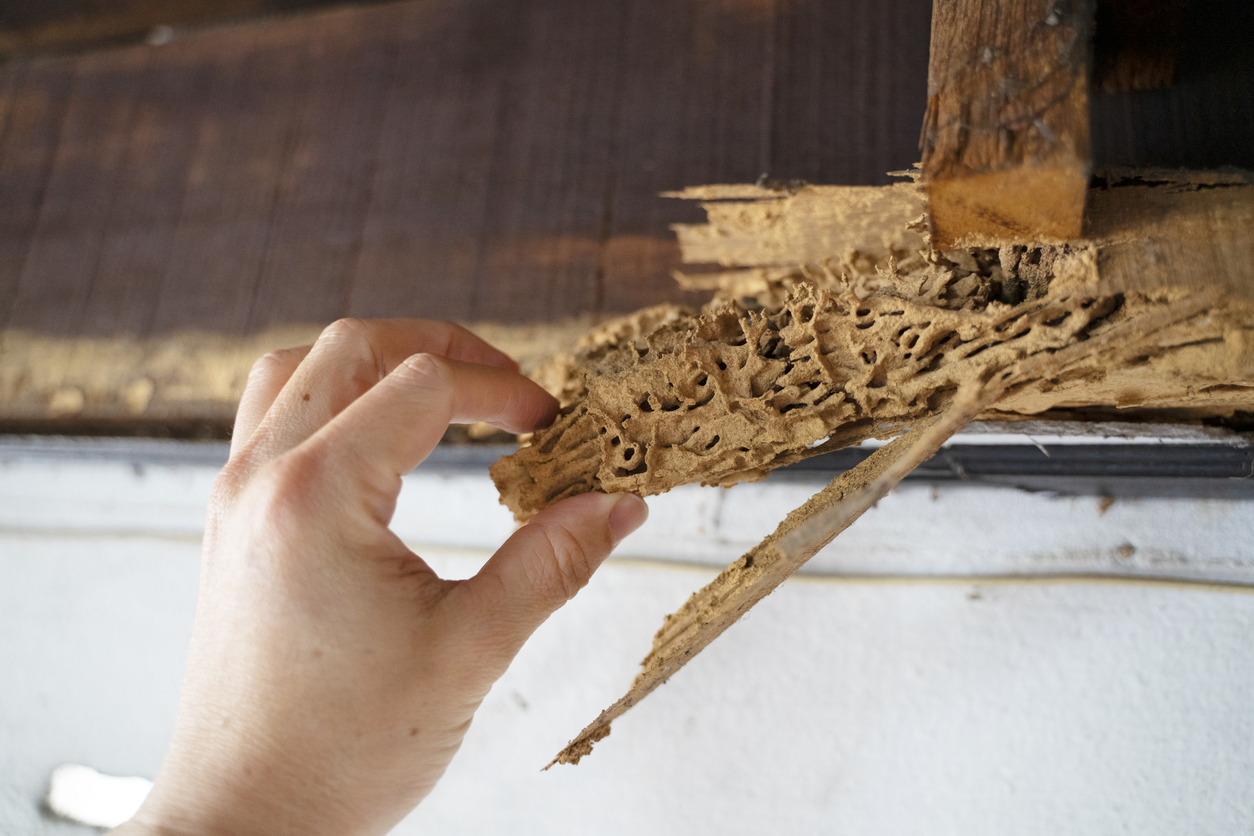
What Does Termite Damage Look Like?
Termite damage is often mistaken for water damage or normal wear and tear of a structure. The signs can be subtle at first, which is why conducting regular inspections is so important.
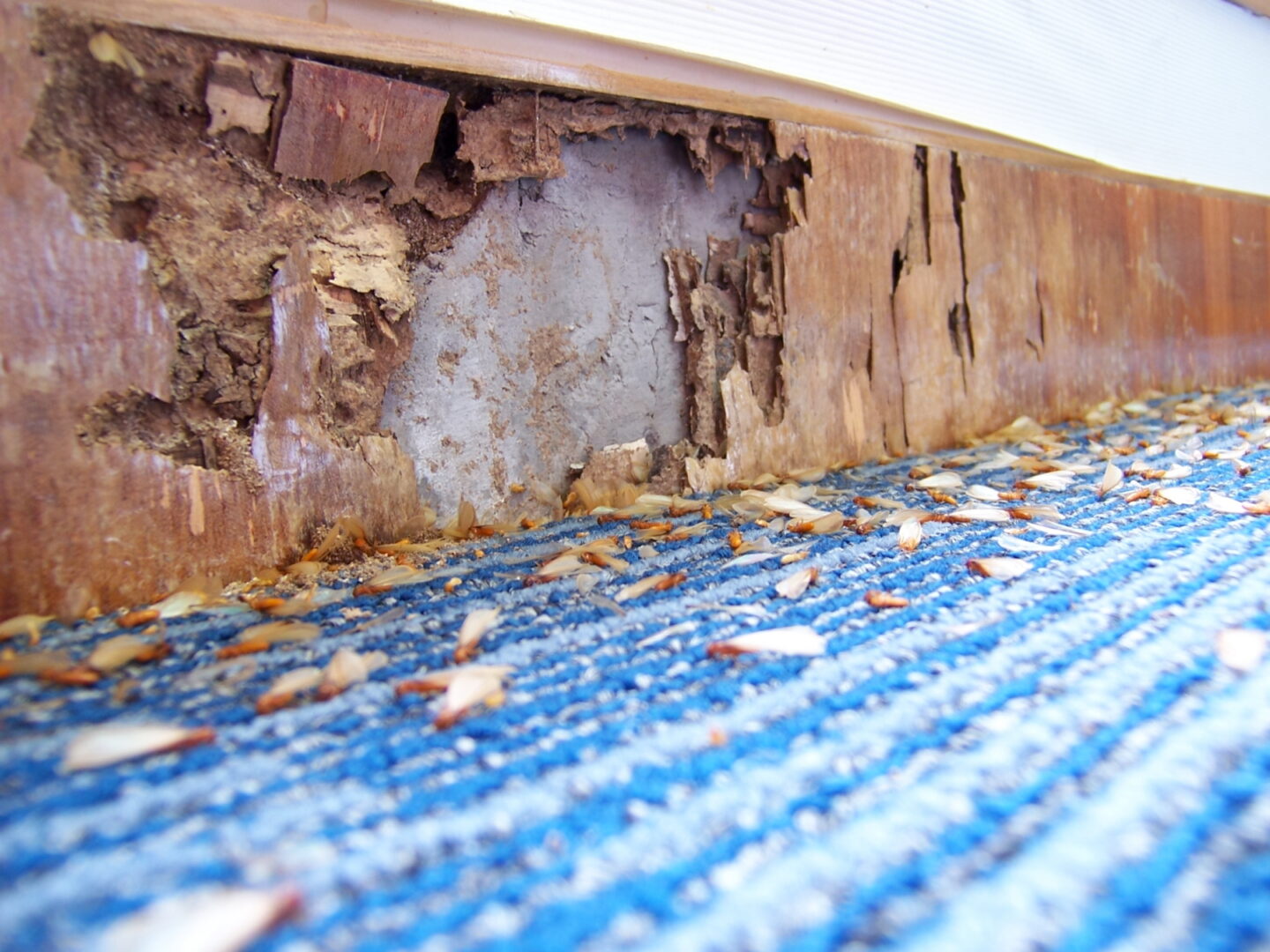
Below are the 5 most common termite warning signs to watch out for:
- Mud tubes along foundations or walls
These pencil-sized (or larger), brown tubes are made of bits of discarded wood, termite saliva, waste, and soil. They help termites travel safely between the soil (where they live) and your home (where they may be foraging for food). - Wood that sounds hollow when tapped
Termites eat wood from the inside out. A hollow sound could indicate termite activity or damage. - Bubbling or peeling paint/wallpaper
This can LOOK like water damage but may be caused by termites tunneling underneath the surface and eating wooden panels of your wall. - Sagging floors or doors that suddenly stick
Structural damage done by termites can cause tiny shifts in your home that affect how doors, windows, and floors operate. - Discarded wings near windows or doors
This is often the first visible sign of a termite swarm. Termite colonies will release winged reproductives (called alates) that swarm and mate. Mated alates shed their wings, and then go off to create new colonies. Termite wings are all the same size and length.
Things That Attract Termites to Your Home
Termites (and all animals, even humans) are always looking for three things to survive: food, moisture, and shelter. Many households have these necessary survival aspects that can unintentionally invite them closer to your home.
Below are some conditions that may be conducive to termite activity:
- Moisture around the foundation of your structure
- Wood that touches soil (ensures easy termite access)
- Firewood stacked near the house
- Tree stumps near a structure
- Leaky gutters or downspouts
- Mulch piled too high against foundations or siding
- Poor drainage around the home
- Cracks larger than the width of a credit card (1/32”)
Even well-maintained homes can attract termites. That is why regular inspections and preventative measures are so important when it comes to termite control.
When Do Termites Swarm Near Me?

In the Midwest and much of the United States, termite swarms typically happen during spring, especially after rain and consistently warm temperatures.
Most homeowners see swarms:
- Between the months of March and May
- During warm afternoons
- After rainfall
- Near windows, doors, or light sources
If you notice flying insects that look like winged ants or wasps, but have equal-sized wings, it is time to schedule an inspection; they are probably termite alates!
Are Termites in My Area?
Yes. Termites are found in nearly every state, including throughout the Midwest and Great Lakes region. The only species in our area is the Eastern subterranean termite, which lives and builds colonies in the soil. These termites are responsible for billions of dollars in damage each year across the United States.
How Expensive Are Termite Treatments?
This is one of the first questions homeowners ask and the answer depends on several factors.
Termite treatment costs can vary based on:
- Size of the home
- Severity of the infestation
- Type of treatment used
- Accessibility of the structure to administer treatment
- Soil conditions around the property
The important thing to remember is:
Termite treatment and prevention in most cases is less expensive than repairing termite damage to a structure.
Early detection keeps costs lower for you. Waiting until damage becomes visible often leads to structural repairs that can cost significantly more than prevention, not to mention the safety threats that termite-damaged structures can pose to you and your family.
Termite Prevention Tips Every Homeowner Can Follow
Preventing termites starts with simple habits that reduce moisture and eliminate access points around your home.
Here are practical termite prevention steps you can take today:
Keep gutters and downspouts clear to prevent excess moisture
Water should be flowing AWAY from your foundation.
Store firewood at least 20 feet from your home
Keep it elevated off the ground to ensure there is no wood touching soil around your structure.
Maintain proper ventilation in your structure, as well as in crawl spaces
Dry environments are less attractive to termites. Make sure spaces are properly ventilated to prevent any possible moisture issues that could attract them.
Seal cracks and gaps around your home
Small openings can become entry points. Remember that a termite can enter your structure through a space as little as 1/32” wide – about the thickness of a credit card.
Schedule routine termite inspections
One of the most effective ways to catch problems early is through the assistance and expertise of a pest control professional.
Most professionals recommend a termite inspection every year. At a minimum, your home should be inspected every two years, even if you have never had a problem. If it’s been longer than two years since your last inspection, now is the perfect time to schedule one for peace of mind.
Think of pest prevention like routine maintenance for your vehicle. Small checkups prevent big repairs down the road.
Protect Your Home Before Termites Become a Problem

Your home is one of the biggest investments you will ever make. Protecting it from termites is not just about avoiding repairs. It’s about protecting your family’s safety, comfort, and financial security. Our Healthy Home Maintenance + Sentricon program gives you year round protection and peace of mind that you’re protected against this destructive insect.
If it has been more than two years since your last termite inspection, reach out today and schedule a visit with our team. A thorough inspection done by one of our experts can provide the peace of mind that every homeowner deserves.
